Bathtub Reglazing

Bathtub Reglazing in Atlantic City, New Jersey (NJ)

A dull or chipped tub in Atlantic City does not need a demolition crew. It needs one technician, one day and a sprayed finish that shines.

One number reaches the technician who would hold the gun. The figure comes on the call, not after a visit.

(866) 951-0558
  • Free call, nothing owed after it
  • The technician for your area picks it up
  • A written figure follows the call

The voice on the line belongs to the trade, not to a switchboard reading a script. Two minutes of plain description are enough to price a standard tub.

Same tubit never leaves the bathroom
One working daymasking in the morning, gloss by evening
24 to 48 hoursfrom final coat to first bath
A fraction of replacingno demolition, no new plumbing bill

Reviving Your Worn Fixture in New Jersey

Now, dealing with a cracked basin can totally ruin your whole morning routine. Fortunately, local pros in Atlantic County can fix this issue fast. This lets you save thousands over a total bathroom overhaul.

Therefore, discovering how surface renewal works will change your entire perspective on home upgrades. Because older properties around ZIP codes 08401, 08404, 08405 often feature vintage cast iron, keeping them intact makes total sense. This saves you from messy demolition projects and keeps your original architecture right where it belongs.

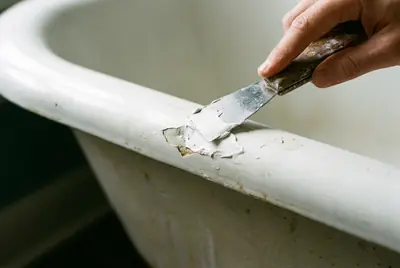
Meanwhile, understanding the actual procedure helps you prepare for the local contractor arrival. First, technicians acid-wash the porcelain to remove soap scum, body oils, and stubborn mineral deposits. Then, they patch up any chips or deep gouges using industrial-grade waterproof fillers.

The Real Science Behind Surface Restoration

Next, workers apply a strong bonding agent so the new finish actually sticks. This guarantees your investment lasts for many years without peeling or bubbling under daily shower use.

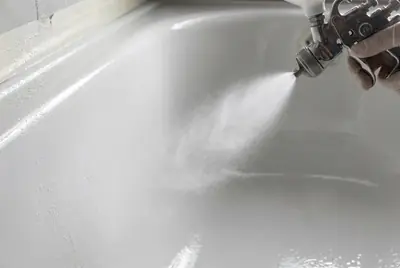
Following that crucial step, they spray specialized acrylic polyurethane coatings using high-volume low-pressure equipment. Consequently, your old tub gets a smooth layer that feels amazing against your skin and repels mildew.

Why Local Homeowners Choose This Path

Indeed, managing a household budget in a place where the median household income sits around $27,786 requires smart financial choices. Replacing an entire bath unit costs a fortune in plumbing labor, tile work, and disposal fees. However, reviving your current basin drops that price tag dramatically while delivering identical visual results.

Furthermore, local professionals handle homes across a region housing roughly 38,372 residents with immense care. Bringing back that glossy shine gives you great satisfaction every time you step into the bathroom. On top of that, your property value gets an instant boost without triggering a massive construction mess.

Evaluating the Pros and Cons of Tub Spraying

Naturally, every home improvement project comes with certain drawbacks that you must consider carefully. For instance, the curing process produces strong chemical odors that require proper ventilation throughout your house. Luckily, trained specialists use exhaust fans to push fumes outdoors so your family stays safe.

Besides that minor inconvenience, newly finished surfaces require gentle cleaning products to avoid scratching the glossy topcoat. Harsh bleach or abrasive scouring pads will dull the shine much faster than standard dish soap. Therefore, adopting a milder cleaning routine lets you preserve that gorgeous finish for a very long time.

Traditional Replacement Surface Restoration
Costs thousands of dollars Saves up to seventy percent
Takes weeks of demolition Finished in just one day
Creates massive landfill waste Preserves your existing fixture

Regarding durability, a professionally sprayed bath handles daily wear surprisingly well if you treat it right. However, dropping heavy metal tools directly onto the surface can still cause chips in the coating. Fortunately, those accidental damages are usually fixable with minor touch-up kits.

What to Expect During Your Project Day

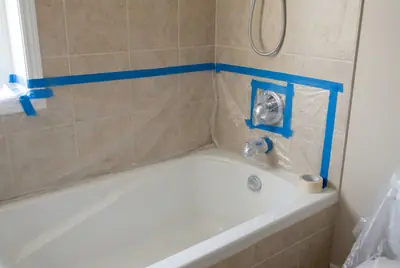
Arriving right on schedule, the crew starts by masking off your surrounding tiles and floors with heavy plastic sheeting. This ensures no overspray ruins your vanity, toilet, or freshly painted bathroom walls. Afterward, they set up ventilation systems to keep the air moving cleanly during the application.

Once the masking is complete, the chemical etching process begins to open up the microscopic pores of the porcelain. Following this intense cleaning phase, any structural cracks get filled and sanded down until completely flush. This meticulous attention to detail delivers the plush coziness you deserve during evening relaxation.

Avoiding Common Pitfalls After the Job

Generally speaking, you should keep the bathroom completely dry for at least twenty-four to forty-eight hours after completion. Allowing the multi-layer coating to cure undisturbed prevents moisture from getting trapped underneath the fresh polymer. Thus, planning ahead for alternative shower arrangements is a smart move for your household.

Additionally, avoiding suction-mat bath mats with rubber cups prevents premature peeling of the brand-new bottom surface. Instead, laying down a loose cotton towel provides safe footing without damaging your newly restored fixture. Implementing these easy habits guarantees your investment stays pristine for many years to come.

Taking the Next Step for Your Bathroom

Ultimately, transforming your tired porcelain into a stunning centerpiece requires zero demolition headaches or plumbing nightmares. Because local contractors know the specific needs of coastal properties, they deliver tailored solutions every single time. This lets you enjoy a gorgeous bathing space without breaking your personal finances.

Now is the ideal moment to reach out and request your complimentary estimate from a trusted nearby specialist. Simply give us a call to schedule your consultation right away. Taking this proactive step puts you firmly on the path toward a stunning home transformation today.

Prep decides everything in Atlantic City

Three quiet stages carry the whole result. They are also the ones nobody sees in the after photo.

The surface earns the coating

Stage 1 of 3

The surface earns the coating

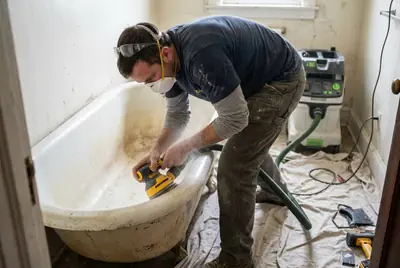
A reglaze fails or lasts on what happens before the gun comes out. The old surface gets scrubbed of soap film and silicone, etched or primed so the new material has something to grip, then wet sanded until it feels like fine paper. Skip any of that and the prettiest coat in the world lets go within a year, which is exactly the story most peeling tubs tell us.

Damage is filled, not painted over

Stage 2 of 3

Damage is filled, not painted over

Chips, rust blooms and worn drain rings are ground back to sound material and rebuilt with polyester filler, then sanded flush until a fingertip cannot find the spot. Coating over damage only photographs well on day one; a repair you cannot feel is what keeps the finish honest for years.

A controlled spray, not a brush

Stage 3 of 3

A controlled spray, not a brush

The topcoat goes on in fine sprayed passes with an extractor pulling air out the window the whole time. Sprayed layers flow together into one even skin, which is why the result reads as gloss rather than as paint. Brushes and rollers leave the texture that gives cheap refinishing its reputation.

Reglaze, liner or new tub in Atlantic City

Three real ways out of a worn tub. We only do the first one, so the other two columns are simply what we would tell a friend.

The questionReglazing in placeAcrylic linerFull replacement
What a standard tub costs$350 to $800$1,600 to $4,000$3,000 to $10,000 once walls and plumbing join in
Bathroom out of actionOne day, then the cureWeeks of lead time, then a fitting dayOne to two weeks of trades
Demolition involvedNone at allNone, but the old tub is sealed insideWalls opened, floor patched, debris hauled
Honest life expectancyFive years and up when cared forLong, unless water creeps between the shellsDecades
Watch out forPrep shortcuts by cut-rate crewsA spongy feel and hidden moistureThe budget doubling mid-project

If your tub is cracked through, actively leaking underneath, or you simply want a different fixture, reglazing is the wrong tool, a verdict you will hear on the very first call.

Six passes over one bathtub in Atlantic City

Deep clean and etch

Pass 1

Deep clean and etch

Soap scum, silicone and old wax stripped, then the surface etched or bonded so the coating can bite.

Chip and rust repair

Pass 2

Chip and rust repair

Every ding ground out, filled and sanded flush. The repairs disappear under the coating instead of through it.

Masking the room

Pass 3

Masking the room

Tile, faucet, floor and glass papered off. Overspray lands on masking paper, never on grout or chrome.

Sprayed finish coats

Pass 4

Sprayed finish coats

Primer, then gloss coats laid on in thin passes until the surface reads as one poured skin.

The cure window

Pass 5

The cure window

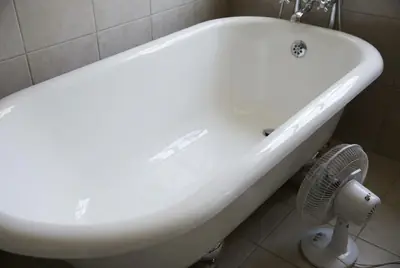
The finish hardens on its own clock, 24 to 48 hours. We tape the door and leave the tub in peace.

Fresh caulk lines

Pass 6

Fresh caulk lines

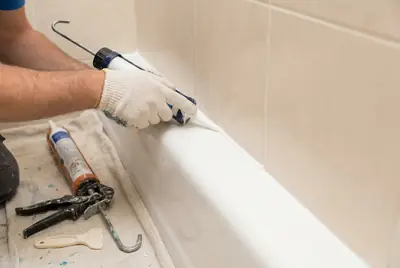
Old caulk goes out with the old finish. A new mildew-resistant bead seals tub to tile on the way out.

Refinished, not reborn

A reglazed tub is your old tub wearing a professional coating. That is a fine thing to be, as long as everyone knows it going in.

What the new surface is

A sprayed acrylic urethane skin, bonded to prepared porcelain, steel or fiberglass. It is smooth, glossy, warm to the touch and fully waterproof. Done properly it gives five years and more of daily service, and plenty of our tubs sail well past that with nothing but gentle cleaning.

What it is not

It is not factory enamel fired onto iron at kiln temperatures, and no honest refinisher will tell you otherwise. It can be scratched by grit, dulled by harsh powders and lifted by standing water in a spot where caulk has failed. It is a durable coating, not a new tub, and it is priced like one.

The habits that stretch it

  • Clean with liquid bathroom cleaner and a soft cloth; abrasive powders and scouring pads are the finish's only real predators.
  • Skip suction-cup mats, or at least lift them out after the bath. Trapped water works on any coating given enough weeks.
  • Fix a dripping faucet early. A steady drip wears a track in the gloss the way it would wear a stone.
  • Rinse and wipe after bath oils and hair dye; both stain slowly when left to sit.
  • Call us about the first chip, not the fifteenth. Spot repairs on our own finish are quick and cheap.

The whole job, measured in your time in Atlantic City

Two minutes

You dial the number

ZIP, what the tub is made of, what bothers you about it. Said out loud it goes faster than typing, and a photo can follow later if the case is odd.

The same call

The figure, spoken

The technician who would do the work asks his questions and names a firm figure for a standard job, then confirms it in writing before any van is booked.

You set the date

The morning of

One van, one technician, drop cloths from the front door to the bathroom. Water off for nothing; only the tub is out of service.

Most of that day

Repair, mask, spray

Damage filled and sanded, the room masked, extractor running, then the primer and gloss coats go on in thin, even passes.

24 to 48 hours

Cure and caulk

The finish hardens untouched, the new caulk bead goes in, and you run the first bath knowing exactly what was done and what to expect of it.

What the work runs in Atlantic City

What we quoteTypical rangeReading the number
Standard bathtub, reglazed complete$350 - $800Clean, etch, repairs, sprayed gloss and fresh caulk.
Chip or rust repair alone$150 - $300When the finish is sound and only one wound needs closing.
Clawfoot tub, inside and out$700 - $1,300Two surfaces, more masking, and paint-grade feet if you wish.
Shower pan or base$300 - $550Same process on the floor you stand on every morning.
Caulk renewal with the job$90 - $180Old bead cut out, mildew-resistant line laid in.
Small job minimumaround $250The van, the materials and the cure time exist even for tiny work.

Heavy previous coatings that must be stripped, unusual colors and badly pitted iron push a job toward the top of its bracket. The written price reaches you before the van is even loaded, and it holds.

How we stand behind a coating

Ventilation is not a courtesy, it is part of the job. The extractor runs from the first solvent wipe to the last sprayed pass, pulling air out the window instead of through your hallway, and the technician wears supplied air even when the household has gone out for the day. By the evening the bathroom smells like a bathroom again.

The materials are the professional two-part systems made for this trade, mixed fresh on site, never the single-can kits sold next to the paint rollers. It is the difference between a finish that cures into a hard skin and one that stays soft enough to peel at the drain within a season, and it is most of the reason our work carries a written workmanship promise against peeling and loss of adhesion.

And the schedule respects the cure. We tell you in writing when the tub goes back into service, 24 hours for most jobs and 48 for the cautious ones, because handing a family a beautiful surface and letting them ruin it that same night helps nobody. If anything in our workmanship lets go early, the technician comes back and makes it right without a discussion about whose fault the water was.

Asked while we tape the paperwork

  1. How bad is the smell, honestly?

    Strong while spraying, gone surprisingly fast. The extractor vents the room to the outside for the whole job around Atlantic City, so the rest of the home stays livable, and by the next morning the odor has left with the fumes. Pregnant households and bird owners get the frank version of this talk before booking.

  2. When can we actually use the tub?

    Between 24 and 48 hours after the final coat, and the exact time is written on the paperwork you keep. The first bath is not a gamble; it is a date.

  3. Can the color change, or only refresh?

    Any color. The most common request is retiring an avocado, pink or almond tub to white, and the coating is tinted before it is sprayed, so the new color is in the material rather than painted over it.

  4. Do fiberglass and acrylic tubs qualify?

    Yes. The prep changes, the primer changes, the result reads the same. Fiberglass with soft, flexing spots gets extra reinforcement talk first, because coating a moving floor is how warranties die.

  5. The tub was coated before and peeled. Now what?

    Now the old coating comes fully off, which is honest work we price plainly, and then the job proceeds as if the tub had never been touched. Peeling almost always means the first crew skipped the etch or sprayed over silicone, not that your tub rejects coatings.

  6. Is five years all I should hope for?

    Five years is the floor we are comfortable promising out loud, not the ceiling. With soft cleaners, no standing mats and caulk kept sound, these finishes routinely serve a decade. What we refuse to do is whisper twenty and hope you lose our number.

The streets around Atlantic City

Zoom for the lay of the land; the link lists further down name every community the van reaches from here.

In and out of Atlantic City

The technician who picks up when you call works these streets, so the ledger below is home turf rather than trivia.

Standing
Incorporated place
Population
38,372
ZIP codes
08401, 08404, 08405
Land area
10.8 sq mi
Density
3,566 per sq mi
Median household income
$27,786
Census region
Northeast

Tubs we respray around Atlantic City

Bright tubs from one end of New Jersey to the other

Somewhere under that worn surface is the tub you chose. One day brings it back.

Call (866) 951-0558