Bathtub Reglazing

Bathtub Reglazing in Divide County, North Dakota (ND)

All over Divide County, worn bathtubs are resurfaced in place: repairs first, gloss second, fresh caulk on the way out.

The technician covering your area draws up the figure. It comes in writing, before any van is booked.

Price my bathtub
  • Free, nothing owed after it
  • Routed to the technician for your area
  • A written figure before any spraying

One callback from the trade, not a switchboard reading a script, and silence after that if you prefer. Two minutes of plain description are enough to price a standard tub.

Same tubit never leaves the bathroom
One working daymasking in the morning, gloss by evening
24 to 48 hoursfrom final coat to first bath
A fraction of replacingno demolition, no new plumbing bill

Bringing New Life To Your Old Bathroom Fixtures in Divide County North Dakota

Are you tired of looking at that ugly stained washing basin in your home? Luckily, a local service provider can fix it without a messy replacement.

Now, fixing up your worn porcelain tub saves you a ton of cash. This means you keep more money in your pocket for weekend trips.

Understanding The Magic Spray Process

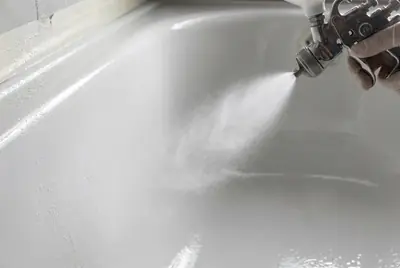
Wondering how a rough tub turns smooth again? Technicians spray a special chemical coating right over the old surface.

Before that happens, professionals scrub away soap scum and nasty mineral deposits. This lets the primer stick really well to the old material.

Afterward, they apply industrial grade polyurethane layers that harden fast. Which means you get a shiny basin that looks brand new in no time.

Why You Should Avoid Full Replacement

Tearing out a heavy cast iron tub causes major structural damage to your floors. Instead, resurfacing lets you keep your original bathroom layout intact.

Plus, hammering out old plumbing creates weeks of dusty construction mess in your hallway. By contrast, spray technicians finish the job in just one single day.

Method Time Needed Mess Level
Resurfacing One day Low
Replacement Two weeks High

Naturally, saving time brings immense peace of mind during busy home renovation projects. On top of that, you dodge costly drywall repairs and plumbing leaks.

Choosing The Right Shades And Finishes

Do you want a bright white basin to match your modern sink? Contractors bring various color chips so you can pick your favorite hue.

Sometimes homeowners prefer almond or biscuit tones for a vintage aesthetic. This versatility ensures your bathroom matches your personal design style.

Protecting Your Investment For Years

Once the glossy topcoat cures completely, you must use gentle cleaning products. Avoid abrasive scrubbing powders that scratch the delicate chemical bonding.

Instead, grab a soft sponge and mild dish soap for weekly wipe downs. This simple habit preserves that fresh finish for many years to come.

Handling Stubborn Cracks And Chips

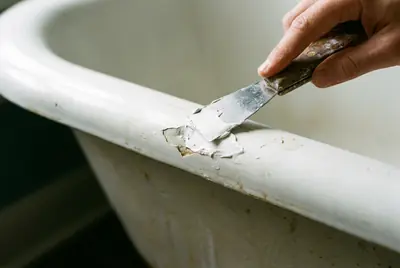
Did dropping a heavy ceramic shampoo bottle crack your basin floor? Skilled technicians fill those ugly gouges with waterproof epoxy resin before spraying.

Consequently, the structural integrity of your bathing area gets fully restored. You will never even notice where the original damage occurred.

Eventually, old tubs wear down from harsh scrubbing over decades of use. Thankfully, professional restoration covers up all those dull patches instantly.

Making The Smart Financial Choice

Remodeling a washroom usually costs a small fortune in material fees. However, upgrading your existing basin costs a fraction of that big budget.

Therefore, landlords love using this affordable trick between tenant lease agreements. This lets property owners maximize rental profits without breaking the bank.

What To Expect During The Appointment

When the contractor arrives at your home, they set up heavy ventilation fans. This step sucks out strong fumes so your house stays breathable.

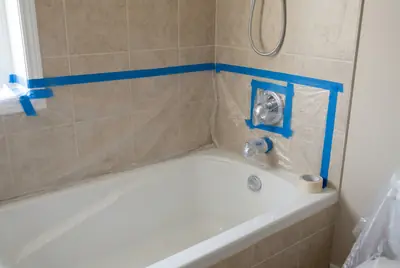
Next, they tape off surrounding tiles and your shower hardware for protection. That careful prep work guarantees paint never gets where it should not be.

Local Climate Considerations In North Dakota

Living in this rural northern territory means dealing with freezing winter temperatures. Extreme weather shifts can sometimes cause plumbing pipes to contract slightly.

Because of this, your bathroom fixtures need durable coatings that flex under stress. Modern acrylic resins handle thermal expansion much better than old porcelain.

Meanwhile, local contractors understand regional climate quirks better than out of state franchises. Supporting neighborhood tradespeople keeps your hard earned dollars right here.

Preparing Your Bathroom Before We Arrive

Before the technician knocks on your door, clear all personal items away. Take down hanging towels, bath mats, and shampoo bottles from the ledges.

Uncluttering the workspace helps the crew move around your small bathroom safely. This small favor lets them finish the restoration project much faster.

Understanding The Curing Timeline

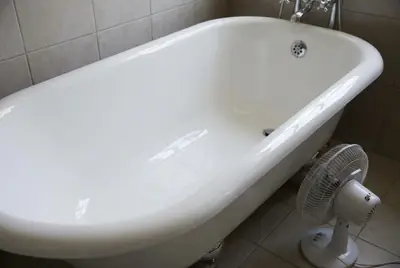
Freshly sprayed polyurethane needs proper time to harden into a rock solid shell. Usually, you must wait at least twenty four hours before running water.

During this waiting period, keep pets and children away from the bathroom door. Patience right now prevents accidental scuffs on your brand new finish.

Eventually, that waiting period ends and you get to enjoy your gorgeous washbasin. Which means relaxing evening soaks are finally back on your schedule.

Common Myths About Surface Restoration

Some folks believe sprayed coatings peel off after only a few months. However, modern bonding agents create a chemical weld that lasts for years.

Another silly rumor claims that resurfaced fixtures always smell like toxic chemicals. In reality, industrial exhaust systems clear out odors before the crew leaves.

Truthfully, skipping these myths helps you make confident home improvement decisions today.

Taking Action To Transform Your Bathroom

Are you finally ready to ditch that disgusting stained tub for good? Reach out right now to secure a complimentary project estimate.

Just use the quote button on this page to request your zero cost consultation. Our friendly local team looks forward to upgrading your home very soon.

Prep decides everything

Three quiet stages carry the whole result. They are also the ones nobody sees in the after photo.

The surface earns the coating

Stage 1 of 3

The surface earns the coating

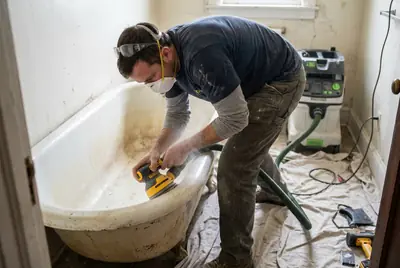
A reglaze fails or lasts on what happens before the gun comes out. The old surface gets scrubbed of soap film and silicone, etched or primed so the new material has something to grip, then wet sanded until it feels like fine paper. Skip any of that and the prettiest coat in the world lets go within a year, which is exactly the story most peeling tubs tell us.

Damage is filled, not painted over

Stage 2 of 3

Damage is filled, not painted over

Chips, rust blooms and worn drain rings are ground back to sound material and rebuilt with polyester filler, then sanded flush until a fingertip cannot find the spot. Coating over damage only photographs well on day one; a repair you cannot feel is what keeps the finish honest for years.

A controlled spray, not a brush

Stage 3 of 3

A controlled spray, not a brush

The topcoat goes on in fine sprayed passes with an extractor pulling air out the window the whole time. Sprayed layers flow together into one even skin, which is why the result reads as gloss rather than as paint. Brushes and rollers leave the texture that gives cheap refinishing its reputation.

Reglaze, liner or new tub

Three real ways out of a worn tub. We only do the first one, so the other two columns are simply what we would tell a friend.

The questionReglazing in placeAcrylic linerFull replacement
What a standard tub costs$350 to $800$1,600 to $4,000$3,000 to $10,000 once walls and plumbing join in
Bathroom out of actionOne day, then the cureWeeks of lead time, then a fitting dayOne to two weeks of trades
Demolition involvedNone at allNone, but the old tub is sealed insideWalls opened, floor patched, debris hauled
Honest life expectancyFive years and up when cared forLong, unless water creeps between the shellsDecades
Watch out forPrep shortcuts by cut-rate crewsA spongy feel and hidden moistureThe budget doubling mid-project

If your tub is cracked through, actively leaking underneath, or you simply want a different fixture, reglazing is the wrong tool, a verdict you will hear on the very first callback.

Six passes over one bathtub

Deep clean and etch

Pass 1

Deep clean and etch

Soap scum, silicone and old wax stripped, then the surface etched or bonded so the coating can bite.

Chip and rust repair

Pass 2

Chip and rust repair

Every ding ground out, filled and sanded flush. The repairs disappear under the coating instead of through it.

Masking the room

Pass 3

Masking the room

Tile, faucet, floor and glass papered off. Overspray lands on masking paper, never on grout or chrome.

Sprayed finish coats

Pass 4

Sprayed finish coats

Primer, then gloss coats laid on in thin passes until the surface reads as one poured skin.

The cure window

Pass 5

The cure window

The finish hardens on its own clock, 24 to 48 hours. We tape the door and leave the tub in peace.

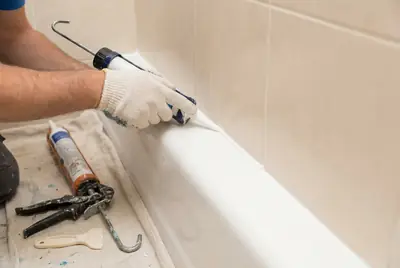
Fresh caulk lines

Pass 6

Fresh caulk lines

Old caulk goes out with the old finish. A new mildew-resistant bead seals tub to tile on the way out.

Refinished, not reborn

A reglazed tub is your old tub wearing a professional coating. That is a fine thing to be, as long as everyone knows it going in.

What the new surface is

A sprayed acrylic urethane skin, bonded to prepared porcelain, steel or fiberglass. It is smooth, glossy, warm to the touch and fully waterproof. Done properly it gives five years and more of daily service, and plenty of our tubs sail well past that with nothing but gentle cleaning.

What it is not

It is not factory enamel fired onto iron at kiln temperatures, and no honest refinisher will tell you otherwise. It can be scratched by grit, dulled by harsh powders and lifted by standing water in a spot where caulk has failed. It is a durable coating, not a new tub, and it is priced like one.

The habits that stretch it

  • Clean with liquid bathroom cleaner and a soft cloth; abrasive powders and scouring pads are the finish's only real predators.
  • Skip suction-cup mats, or at least lift them out after the bath. Trapped water works on any coating given enough weeks.
  • Fix a dripping faucet early. A steady drip wears a track in the gloss the way it would wear a stone.
  • Rinse and wipe after bath oils and hair dye; both stain slowly when left to sit.
  • Tell us about the first chip, not the fifteenth. Spot repairs on our own finish are quick and cheap.

The whole job, measured in your time

Two minutes

You ask for the figure

ZIP, what the tub is made of, what bothers you about it. A short request starts it, and a photo can follow later if the case is odd.

The callback

The figure, in writing

The technician who would do the work asks his questions on the callback and names a firm figure for a standard job, confirmed in writing before any van is booked.

You set the date

The morning of

One van, one technician, drop cloths from the front door to the bathroom. Water off for nothing; only the tub is out of service.

Most of that day

Repair, mask, spray

Damage filled and sanded, the room masked, extractor running, then the primer and gloss coats go on in thin, even passes.

24 to 48 hours

Cure and caulk

The finish hardens untouched, the new caulk bead goes in, and you run the first bath knowing exactly what was done and what to expect of it.

What the work runs

What we quoteTypical rangeReading the number
Standard bathtub, reglazed complete$350 - $800Clean, etch, repairs, sprayed gloss and fresh caulk.
Chip or rust repair alone$150 - $300When the finish is sound and only one wound needs closing.
Clawfoot tub, inside and out$700 - $1,300Two surfaces, more masking, and paint-grade feet if you wish.
Shower pan or base$300 - $550Same process on the floor you stand on every morning.
Caulk renewal with the job$90 - $180Old bead cut out, mildew-resistant line laid in.
Small job minimumaround $250The van, the materials and the cure time exist even for tiny work.

Heavy previous coatings that must be stripped, unusual colors and badly pitted iron push a job toward the top of its bracket. The written price reaches you before the van is even loaded, and it holds.

How we stand behind a coating

Ventilation is not a courtesy, it is part of the job. The extractor runs from the first solvent wipe to the last sprayed pass, pulling air out the window instead of through your hallway, and the technician wears supplied air even when the household has gone out for the day. By the evening the bathroom smells like a bathroom again.

The materials are the professional two-part systems made for this trade, mixed fresh on site, never the single-can kits sold next to the paint rollers. It is the difference between a finish that cures into a hard skin and one that stays soft enough to peel at the drain within a season, and it is most of the reason our work carries a written workmanship promise against peeling and loss of adhesion.

And the schedule respects the cure. We tell you in writing when the tub goes back into service, 24 hours for most jobs and 48 for the cautious ones, because handing a family a beautiful surface and letting them ruin it that same night helps nobody. If anything in our workmanship lets go early, the technician comes back and makes it right without a discussion about whose fault the water was.

Asked while we tape the paperwork

  1. How bad is the smell, honestly?

    Strong while spraying, gone surprisingly fast. The extractor vents the room to the outside for the whole job, so the rest of the home stays livable, and by the next morning the odor has left with the fumes. Pregnant households and bird owners get the frank version of this talk before booking.

  2. When can we actually use the tub?

    Between 24 and 48 hours after the final coat, and the exact time is written on the paperwork you keep. The first bath is not a gamble; it is a date.

  3. Can the color change, or only refresh?

    Any color. The most common request is retiring an avocado, pink or almond tub to white, and the coating is tinted before it is sprayed, so the new color is in the material rather than painted over it.

  4. Do fiberglass and acrylic tubs qualify?

    Yes. The prep changes, the primer changes, the result reads the same. Fiberglass with soft, flexing spots gets extra reinforcement talk first, because coating a moving floor is how warranties die.

  5. The tub was coated before and peeled. Now what?

    Now the old coating comes fully off, which is honest work we price plainly, and then the job proceeds as if the tub had never been touched. Peeling almost always means the first crew skipped the etch or sprayed over silicone, not that your tub rejects coatings.

  6. Is five years all I should hope for?

    Five years is the floor we are comfortable promising out loud, not the ceiling. With soft cleaners, no standing mats and caulk kept sound, these finishes routinely serve a decade. What we refuse to do is whisper twenty and hope you lose our number.

The streets around Divide County

Zoom for the lay of the land; the link lists further down name every community the van reaches from here.

Somewhere under that worn surface is the tub you chose. One day brings it back.

Get my written figure